

EXPLORE BALLONA!®
Mix and match our environmental education content to meet your students’ needs
IN-PERSON FIELD TRIP

Students use binoculars to make observations of Ballona Wetlands saltwater marsh habitat.
From a pre-visit lesson, to hands-on field trip, to post-visit concluding lesson, this field trip experience will help students learn wetland ecology and become environmental stewards. Field trip topics are age appropriate and support grade specific NGSS and History/Social Science Standards. Help your students grow their understanding of the natural world and their role in it through Explore Ballona!®
VIRTUAL FIELD TRIP

Bring live views of the wetlands into your classroom, play games and plenty of student Q&A
Allow our staff to be guest speakers with your students! This can range from a topic based lesson to an interview with an expert to a live virtual field trip conducted from Ballona Wetlands. Interactions can be provided through the virtual meeting application approved by your district (ex: Zoom, Meet, etc.).
EDUCATION RESOURCES
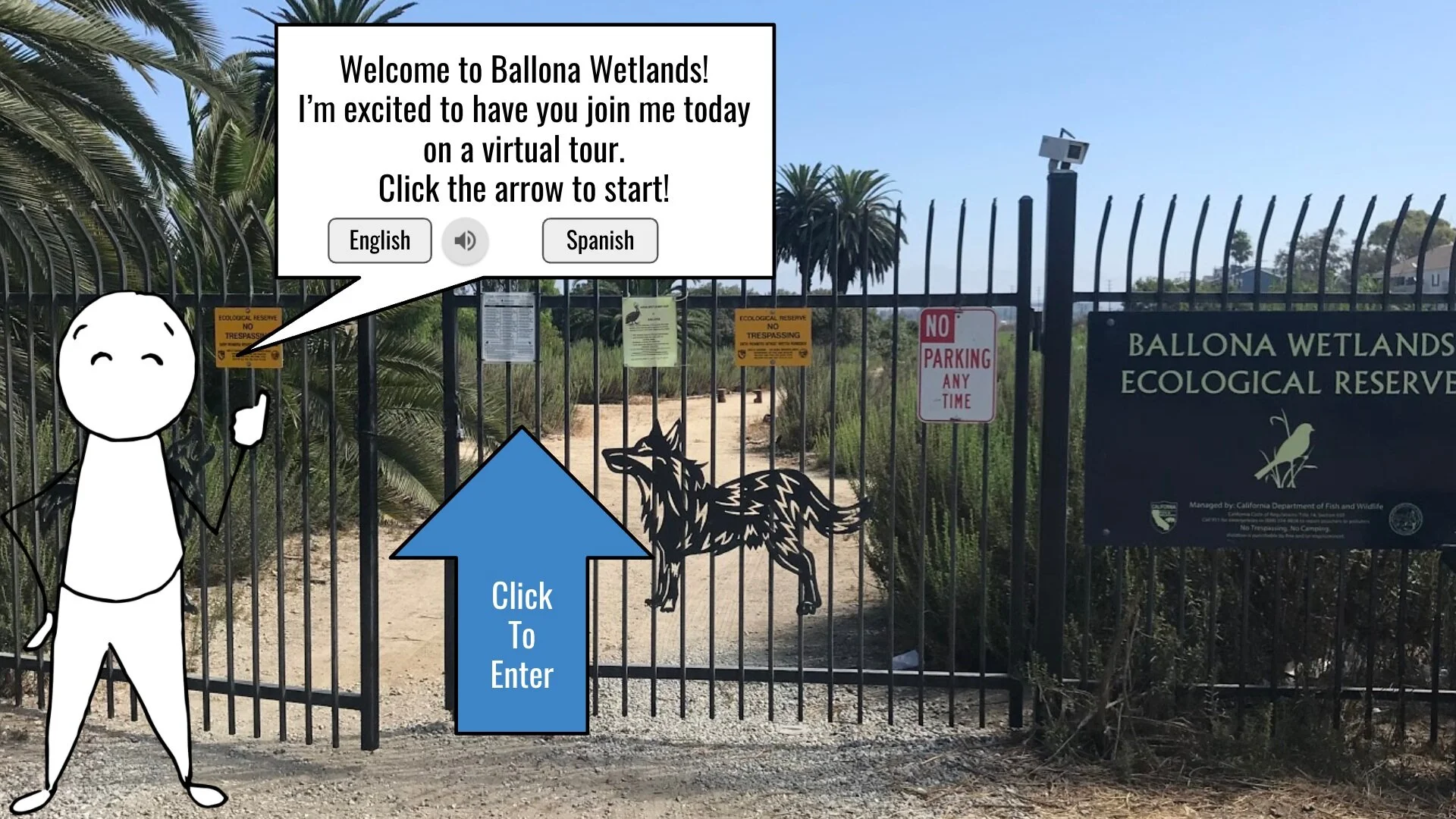
Find this interactive tour and many more resources.
Links to interactive tours your students can go through at their own pace (available in Spanish), videos, and downloadable content to add to your units. Discover the variety of content available, and if you don’t see what you need, request a specific topic.


To request programming and get more details, please fill out the
Explore Ballona! ® Field Trip FAQs
-
Depending on the topic and grade level, 1.5-2.5 hours for in-person and 30-60 minutes for virtual.
-
We appreciate an honorarium of $5/participant but inability to donate will NOT affect programming.
-
Friends of Ballona Wetlands is proud to provide a limited number of bus scholarships each year upon request.
-
We may limit student numbers for field trips but we will work with you to accommodate all students with different sessions or days.
-
Once your field trip is booked, we will work with you to figure out pre and post field trip lessons that can be provided by our staff in your classroom virtually or in-person at no cost.
-
With grade specific curriculum and age appropriate activities, students will rotate through various stations led by our highly trained staff. Whether through use of binoculars or hands-on restoration, your students will be engaged and excited throughout the field trip!
For specific questions please contact our environmental education staff:
Elementary and Middle School Programs:
Carolyn Everhart
Director of Environmental Education
carolyn@ballonafriends.org
High School and University Programs:
Patrick Tyrrell
Director of Habitat Restoration and Upper Education
patrickt@ballonafriends.org